Family-Friendly Day Hikes That Still Feel Wild
As an Amazon Associate, we earn from qualifying purchases.
January 26, 2026 - Reading time: 8 minutes
Not all family hikes should feel tame. Discover thoughtful, family-friendly day hikes that preserve solitude, wonder, and a genuine sense of wilderness, without pushing kids beyond their limits.
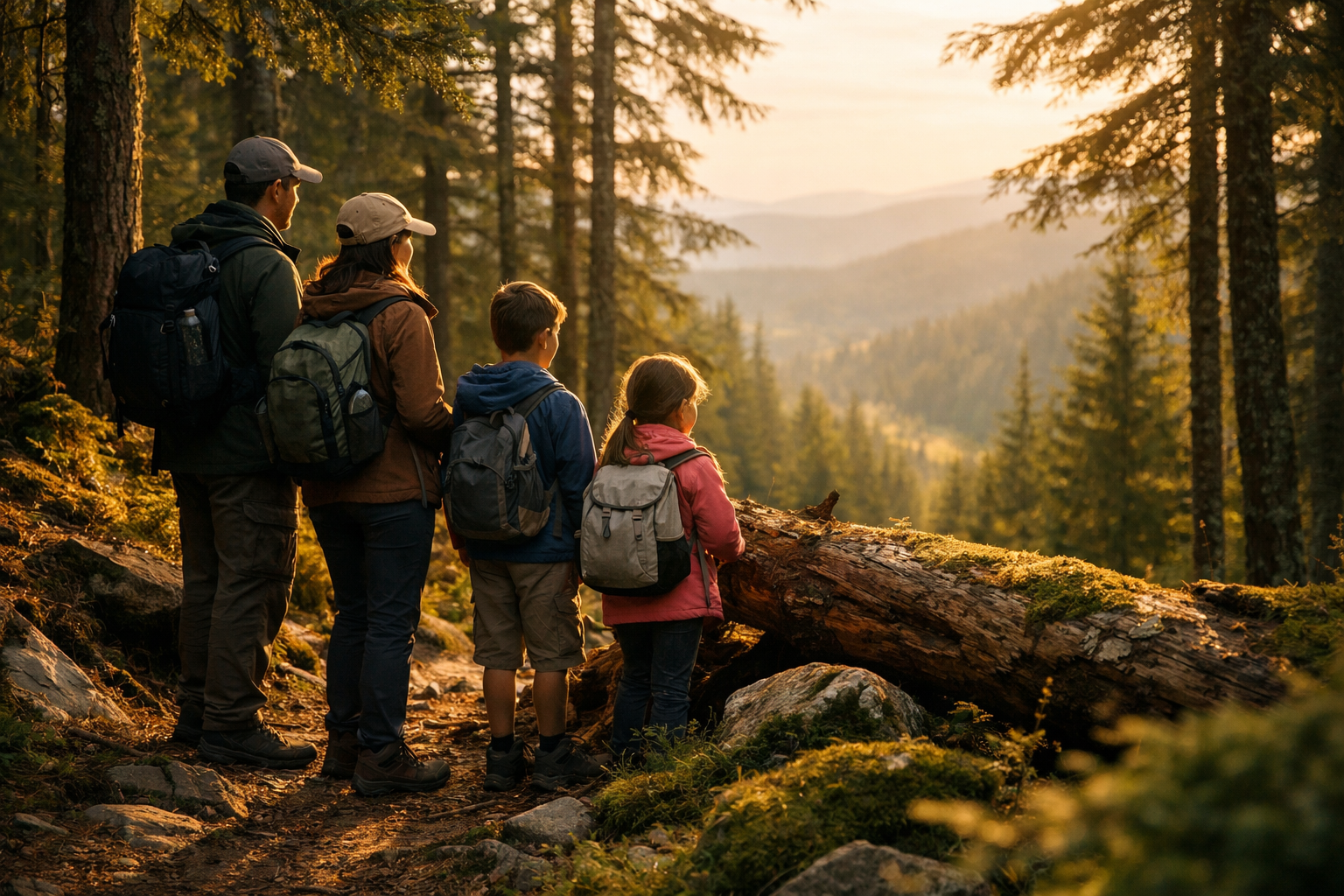
There is a subtle but important distinction between taking your family outdoors and inviting them into the wild.
Many trails marketed as “family-friendly” unintentionally strip away the very qualities that make nature meaningful. They are wide, crowded, overly developed, and designed to move people efficiently from point A to point B. They are safe but forgettable.
The hikes that stay with us are different. They move at nature’s pace. They don’t rush. They don’t overwhelm. And they don’t apologize for feeling a little untamed.
For families, especially those introducing children to hiking, these are the trails that matter most.
Why “Wild” Matters More Than Distance
Children don’t measure adventure in miles or elevation gain. They measure it in sensations:
-
The way the forest quiets when they stop talking
-
The discovery of a trail bending out of sight
-
The thrill of crossing a stream on stones instead of a bridge
When a hike feels wild, children engage differently. They observe instead of endure. They ask questions instead of checking out. They begin to understand that nature is not entertainment, it is relationship.
And that understanding forms the foundation of lifelong stewardship.
Redefining “Family-Friendly” Hiking
Family-friendly should never mean sanitized. It should mean accessible, forgiving, and honest.
A well-chosen family hike allows:
-
Uneven terrain without exposure
-
Natural obstacles without danger
-
Quiet without isolation
-
Challenge without exhaustion
These hikes encourage resilience, curiosity, and confidence without requiring technical skills or expensive gear.
Trail Types That Preserve a Sense of Wilderness
Forest Trails That Close In
Trails that move through dense woodland create immediate immersion. Tree cover blocks outside noise, light shifts as clouds pass, and the path itself feels purposeful rather than recreational.
A simple loop through old-growth forest often feels more adventurous than a long open trail, especially for children. The forest becomes the experience.
Tip: Solid footwear matters more here than distance. Well-built, waterproof hiking boots from brands like Muck Boots offer traction and protection for muddy, root-filled trails without sacrificing comfort on shorter hikes.
Creekside and Waterfall Hikes
Water changes everything. It slows people down. It gives children a reason to stop. It adds sound, motion, and life to the trail.
Creekside hikes naturally encourage:
-
Observation (frogs, fish, insects)
-
Playful exploration
-
Frequent breaks without complaint
Compact, lightweight daypacks such as those from Duluth Pack are ideal for carrying snacks, water, and spare layers while keeping kids’ hands free for scrambling and discovery.
Canyon and Gorge Walks
Canyon trails often feel dramatic without being strenuous. Sheer walls, winding corridors, and filtered light give even short hikes a sense of scale and mystery.
Because these environments feel “big,” children instinctively lower their voices and become more aware of their surroundings, an organic introduction to outdoor respect and awareness.
Gentle Ridges with Earned Views
A gradual climb to a scenic overlook teaches an important lesson: effort leads to perspective.
Children don’t need panoramic vistas to feel accomplished. They need the sense that something was earned. A ridgeline bench, a rock outcrop, or a quiet clearing can be enough.
Warm layers matter more at elevation, even on short hikes. Compact insulated gear or heated accessories from ActionHeat can extend comfort during shoulder seasons without overpacking.
Let the Trail Dictate the Pace
One of the most common mistakes families make is trying to “complete” a hike rather than experience it.
Wild-feeling hikes reward flexibility:
-
Turn around early if curiosity fades
-
Sit longer when something captures attention
-
Let silence happen naturally
Distance goals matter far less than engagement. Children who feel rushed learn to associate hiking with pressure. Children who feel trusted learn confidence.
Gear That Supports Exploration (Without Overloading)
Wild doesn’t mean unprepared, but it does mean intentional.
For family hikes:
-
Carry fewer items, but better ones
-
Prioritize comfort over performance extremes
-
Choose durability over novelty
A reliable thermos, like those from Thermacup turns a simple snack break into a ritual. Warm drinks at a quiet overlook can anchor a memory more powerfully than any summit photo.
Compact lighting, such as a WUBEN Light flashlight, adds reassurance for shaded forests or late-afternoon returns without introducing unnecessary complexity.
Teaching Respect Without Lectures
Wild trails teach lessons quietly:
-
Leave-no-trace becomes intuitive when the environment feels fragile
-
Wildlife awareness becomes real when animals feel present
-
Noise discipline emerges naturally in quiet places
You don’t need to explain everything. Let the trail do the teaching.
The Emotional Aftermath of a Meaningful Hike
Long after children forget the trail name or distance, they remember:
-
The way the air felt cooler near water
-
The stillness before someone spoke
-
The moment they realized they were capable
These experiences accumulate. Over time, they shape how children see challenge, solitude, and the natural world.
Why These Hikes Matter Now More Than Ever
Modern life moves fast and speaks loudly. Wild-feeling day hikes offer a counterbalance—especially for families.
They provide:
-
Unstructured time together
-
Shared problem-solving
-
Moments of collective quiet
And perhaps most importantly, they remind children that the world exists beyond screens and schedules and that they belong in it.
Family-friendly hiking does not have to feel manufactured. It can feel honest, immersive, and quietly powerful.
The best day hikes don’t demand endurance or expertise. They ask only for presence.
At Outdoor Pioneers, we believe the wild is not something to conquer or dilute, it’s something to meet with care, patience, and intention. And there is no better way to do that than together.